According to LinkedIn’s 2025 B2B Marketing Benchmark Report, 94% of B2B marketers believe that trust is the most essential factor for brand success. But how is buyer confidence initiated and, even more importantly, sustained over time?
One-off campaigns or seasonal advertising pushes may feel necessary as budgets tighten and resources dwindle, but those efforts may fall short without consistent visibility in the channels your audience relies on and respects. A year-round presence positions your company as a serious supplier worthy of consideration.
To shed light on how brand visibility impacts the buyer’s journey, Sosland Publishing partnered with Cypress Research to conduct research on buyer attitudes and preferences on behalf of Food Business News and Baking & Snack.
The Ingredient Buyer’s Journey 2025 study by Food Business News surveyed more than 100 professionals responsible for ingredient purchasing decisions, while Baking & Snack’s Baking Equipment Buyer’s Journey 2024 study surveyed more than 100 wholesale bakery professionals involved in equipment procurement.
Findings from these studies point to a clear conclusion: suppliers that maintain a strong, consistent footprint are perceived as more credible, knowledgeable, stable and accessible. In fact, 85% of equipment buyers and 59% of ingredient buyers said they prefer to do business with suppliers that actively promote their presence in the industry.
Use the five tips below to make your mark across the buyer’s journey, strengthen credibility and keep your brand top of mind when prospects need you.
1. Show up before the search starts
Purchasing decisions are influenced long before a buyer reaches out. Sixty-four percent of manufacturers often select an ingredient supplier from their day-one list, while 68% of manufacturers select an equipment manufacturer from their day-one list, according to Sosland’s studies.
When buyers start researching and building a shortlist, your name should already feel familiar. If your company only appears when you are actively promoting a new product, you risk entering the conversation late.
Trade media, SEO marketing and trade shows can help build a steady presence that keeps you visible during off-peak months. Consistent exposure will help you earn trust earlier and reduce the likelihood of being the questionable option.
2. Build trust through repetition
Trust grows through familiarity. When buyers repeatedly see your brand in credible places, they are more likely to view your company as an engaging and experienced industry leader.
From native articles to industry events, reinforce your identity and value across formats. Over time, those touchpoints add up and make your company easier to recall when purchasing decisions arise.
Seeing the same supplier message reinforced over time makes a brand’s product easier to justify internally. That consistency reduces perceived risk long before a purchasing decision is made.
3. Use trade media to reach the right people
Trade publications are one of the most efficient ways to reach targeted audiences in the food industry.
A year-round presence in trade magazines, websites, newsletters and directories helps you stay visible to a qualified audience without the waste that often comes with broad targeting. Plus, your brand is instantly connected with professionals who care about processing improvements and product innovation.
Trade print magazines and websites remain key tactics used by decision-makers across most phases of the ingredient and equipment buying process, particularly during the discovery and supplier expansion phases.
When selecting a trade media organization to partner with, focus on audience quality, editorial trust and their ability to deliver results across multiple points of contact. Meeting these requirements ensures your brand will receive enhanced recognition and engagement over time.
4. Reinforce your message across channels
To maintain visibility, you need to rely on more than one channel. The most effective strategy is a balanced mix that creates a seamless experience for buyers.
Consider pairing traditional and digital touchpoints, such as:
Trade magazine ads that drive to a dedicated landing page
Directory listings that link to a demo video
Trade show booth reinforced with pre-show and post-show email outreach
When buyers encounter your company in multiple places with steady messaging, recall improves and your credibility strengthens.
B2B buyers also move between these channels quickly, and sometimes in a non-linear fashion. One buyer might first encounter your brand through a demo video on LinkedIn before visiting your website, while another may hear about you from an industry peer and seek you out at a trade show.
Your job is to make that journey easy. Ensure your messaging, visuals and calls to action align across interactions so buyers do not feel like they are starting over every time they find you in a different place.
5. Support long sales cycles with ongoing touchpoints
Sales cycles for ingredient and equipment purchases are getting longer, and these large purchases require stakeholder input and financial and technical review. During that time, buyers need reassurance that a supplier is stable and credible.
When you stay visible year-round, you gain a competitive edge. If your competitors maintain a steady presence and you disappear for months at a time, buyers may assume you are less active or less relevant.
Buyers are not waiting for a single campaign to decide who they trust. They are forming opinions over time, across multiple interactions, often before they ever reach out. A consistent presence ensures your brand is part of that process, not an afterthought when the decision is already underway.
Want to develop a brand strategy that effectively reaches food industry decision-makers? Connect with a Sosland Publishing media expert to explore trade media and digital options that keep you in front of the right audience all year long.
Analytics play a crucial role in evaluating the success of advertising campaigns. Yet, verifying the accuracy of these metrics can pose a significant challenge. To avoid receiving a distorted view of a campaign’s performance, ingredient and equipment suppliers in the food and beverage industry need a way to verify the accuracy of these metrics.
Asking the right questionsbefore and after you receive your campaign’s performance datais critical. Below we’ve rounded up some questions you can ask B2B media companies to validate campaign results and ensure the data you receive is accurate.
What is the data source, and can you provide details about the methodology used for tracking and measuring ad performance?
Understanding the source of acampaign’s results is crucial to verifying its legitimacy. Ask B2B media companies where they obtain their data from and whether it is collected directly from their own platforms or through third-party providers. A trustworthy company should have rigorous data collection methods and be transparent about the sources they rely on for their analytics.
It’s also important to understand the methodology used for measuring ad performance. Ask about the metrics they track and how they calculate them. Inquire about the tools and technologies they use to track impressions, clicks, conversions, and other key performance indicators. This will give you insights into their data collection processes and help you evaluate the reliability of their analytics.
Do you use third-party verification services or tools to validate the accuracy of your analytics?
A reputable media company should be willing to provide access to raw data or offer third-party verification of their analytics. Ask if you can access the data behind the reported metrics to validate their accuracy. Alternatively, see if they are open to third-party audits or verification from independent measurement firms such as the Alliance for Audited Media. This will add an extra layer of credibility to analytics and alleviate any concerns about inflated audience reach.
How do you prevent and detect click fraud to ensure that click-through rates are not artificially inflated?
When addressing concerns about inflated metrics, it’s crucial to understand how atrademedia outlet prevents and detects click fraud. Click fraud happens when a click bot clicks on an ad, website link or in an email.This makes end users believe that someone is authentically engaging with their business, even though it’s not true.
Inquire about their use of advanced fraud detection tools and ask about their methods for monitoring unusual user engagement. For example, Sosland Publishing’s email service provider Omeda automaticallyidentifies andremovessuspicious clicksfrom all email and newsletter reporting.Omeda also offers information on where fake clicks are coming from, so our brands can block the sending addressand provide accurate reporting.
How often do you clean your audience list?
To ensure your campaign is reaching the right audience,askyour B2B media partner about how frequently they clean and update their audience lists.
Regular maintenance of these lists ensures that reader data remainsaccurate and up to date and demonstrates the company’s commitment to providing high-quality audience data. In addition, a clean list helps youreach engaged audiences, leading to improved campaign performance and stronger connections with leads.
Can you provide references from other clients who have used your advertising services?
Client testimonials can provide valuable insights into the performance of ad campaigns run by media companies. Ask for references to help you measure the media company’s track record and determine if their analytics align with your expectations.
It’s essential to ask the right questions to B2B media companies to ensure that the campaign results you receive are legitimate and help you achieve your marketing goals.Reach out to a Sosland Publishing media expert to learn how wecan connect you to an engaged community of readers from across the foodindustry.
In Sosland Publishing’s new series “On my radar,” marketers from across the food industry reveal what they’re reading, listening to and watching to stay up to date on the latest marketing trends. For this month’s edition, we spoke to Rick Oleshak, vice president – marketing, AB Mauri North America.
Sosland Publishing: What is your background in marketing?
Rick Oleshak: I probably have a more unique path to the business-to-business (B2B) baking industry compared to other marketers across the category. My initial job roles were in sports, including spending time with the Orlando Magic during the exciting Shaquille O’Neal and Penny Hardaway years and with NASCAR as part of its corporate public relations team based in Daytona Beach, Florida. From there, I moved to St. Louis and spent more than 13 years at Anheuser-Busch in the brewing industry, with the last seven years in brand marketing directing and managing brands like Stella Artois, Michelob ULTRA, Rolling Rock and others.
I was recruited to AB Mauri North America in 2014 and have loved every minute of it. Baking is exciting – as we saw during the pandemic as the demand for Fleischmann’s Yeast by home bakers grew by more than six times – and I’m always amazed at the technology in product solutions and technical service that our team delivers. Beyond bakery marketing for the U.S. and Canada, a third of my time is also spent on global strategic marketing for AB Biotek, another division under AB Mauri that is focused on fermentation solutions for the human and animal nutrition, consumer alcohol and bioethanol markets.
What are you reading, watching or listening to right now to keep up with marketing trends?
Business reading
I just finished a quick read called Marketing Myopia, a Harvard Business Review publication by Theodore Levitt that is a classic focused on the differences between selling and marketing. This book is a perfect, snackable read if you have a quick flight or commute.
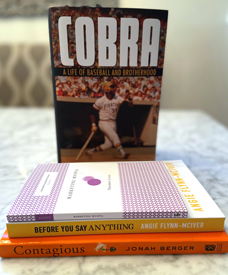
Also on the list is Before You Say Anything by Angie Flynn-McIver about the learned ability to communicate, even in this new virtual world we live in. Last, Contagious: Why Things Catch Onby Jonah Berger focuses on the spread of ideas and the key drivers of word of mouth.
Personal reading
Reading for just plain enjoyment is important, too, and there are lessons to be learned as well. I’ve read every John Grisham novel, including his latest The Judge’s List. I really admire his attention to the fine details on the scenes he paints with text. This should apply to anything we do as marketers.
Additionally, as a big baseball fan and one of the few Pittsburgh Pirates supporters in St. Louis, I’m reading former slugger Dave Parker’s book about his career. The book Cobra:A Life of Baseball and Brotherhood, which was Parker’s nickname during his playing days, highlights the most-feared, multi-tool athlete of the late 1970s.

Podcasts
Recently, I read NPR’s Podcast Start Up Guide by Glen Weldon in preparation for a new AB Mauri North America podcast called ‘The Oven Light’ that debuted earlier this year. We are several episodes in now, and it has been a blast to highlight not only important topics for industrial and artisan bakers but also some of the great people and outstanding culture we have within our organization.
As a more recent newcomer to the podcast world, personally, I’ve enjoyed listening to a variety of content for both bakery business learning — such as Baking & Snack’s ‘Since Sliced Bread’ — and enjoyment — like ‘Smartless’ featuring actors Jason Bateman, Sean Hayes and Will Arnett.